

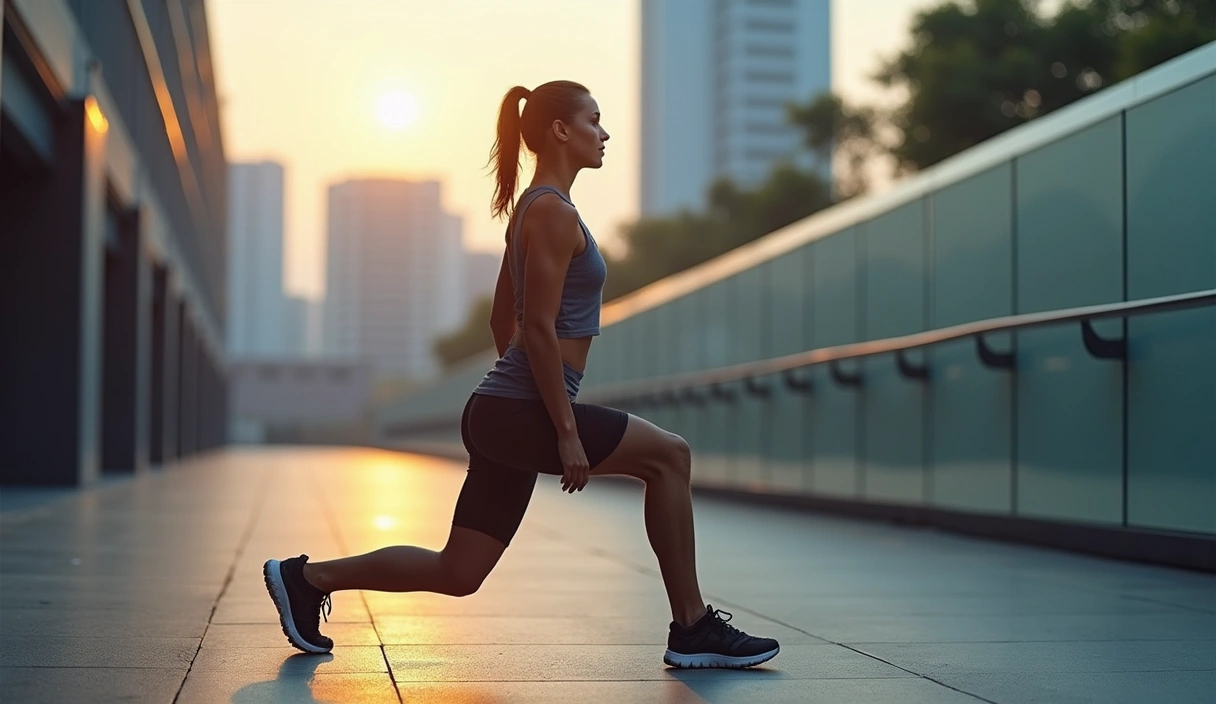
Working the legs and glutes is important for a strong foundation in any fitness routine. The reverse lunge is a simple but effective lower-body move that gets muscles working. Certified personal trainer BB Arrington, CPT, says this move is gentler on the joints and safer for beginners than classic lunges.
How to do reverse lunges
To perform a reverse lunge, start in a standing position. Optionally, hold a weight in one hand. Step the left leg a bit behind the body. Hinge at the hips, reach the back leg behind, and bend both knees to lower down. Hold for three seconds, then return to the starting position. That is one rep.
Tips and modifications
For beginners who are still building strength, the weight can be omitted and hands can stay on the hips to make the exercise easier. Arrington recommends keeping the hips square to target muscles properly. The core should be engaged “up and in” throughout the exercise. To incorporate breath, exhale as the knee lowers and inhale on the way back up.
What are the benefits
Compared with a classic forward lunge, which makes the quadriceps do more work, the reverse lunge challenges the glutes more. Arrington explains that in a reverse lunge there is a good stretch in the glutes, though the quadriceps and hamstrings also help. The move puts less strain on the joints, which is beneficial for people with knee issues. With added weights and core engagement, it works the arms and abs as well. Because stepping back requires balance, the exercise also improves stability.
The reverse lunge can be included in leg day workouts or full-body sessions. Despite its simplicity, it builds strength gains over time. This variation is commonly recommended for its combination of glute activation and joint safety.

- Brazil Lunge Variation Boosts Glutes, Reduces Knee Stress - abril 26, 2026
- Brazil companies to pay dividends this week - abril 26, 2026
- Brazil study finds hormone is strongest predictor of aging speed - abril 26, 2026
